|
Peter
Lamas is one of the leading make-up artists and beauty
experts in the world. His clients read like a Who's Who
of Hollywood -- Jackie Onassis, Elizabeth Taylor, Audrey
Hepburn, Faye Dunaway, Diana Ross, Sharon Stone, Cindy Crawford
and Kate Winslet, to name but a few. Peter's film credits
include the gorgeous make-up design seen in James Cameron's
Titanic. Peter regularly appears on television and in the
media in North/South America, Europe and Asia. He travels
extensively across the globe, speaking to women of many
different cultures, about how they can realize their potential
to be beautiful both inside and out.
Peter
is founder and Chairman of Lamas Beauty.
|
SMART
AND SAVVY HAIR CARE . . . NATURALLY
Before
a drop of shampoo ever touches a human head, millions of dollars
in development, packing and advertising costs have already been
spent. Glossy television campaigns promise thick, strong and healthy
hair so full of shine, you almost need sunglasses to get through
the commercial. Now that the hair care industry is trending towards
"natural ingredients," we can expect to see an all out
media blitz from all manner of companies, small and large, promoting
their own "natural" line.
"Natural"
or "herbal" shampoos first became popular 1970s, on
the heels (and hair) of the hippie movement, and began to make
a comeback in the mid 1990s. The number of hair products formulated
with botanical extracts has increased exponentially in the past
decade: According to The Nutrition Business Journal, natural hair
care products registered sales of $1.45 billion in 1999, making
up 28 percent of the $5 billion hair care market. Experts say
the growth in natural personal care will continue to grow for
at least the next five years, at a rate of 20 to 25 percent annually.
That's
a big market. And keen manufacturers are quickly tapping into
it, inundating consumers with literally hundreds of shampoos and
conditioners that boast herbal essences and botanical extracts.
With such an overwhelming selection, how can the discriminating
specialty retailer decide what to offer to their customers?
There
is no quick answer, but there are a number of things to ensure
shoppers are choosing from the most innovative, and more importantly,
the healthiest hair care products. First and foremost, the retailer
needs to determine how committed they are to providing their customers
with natural hair care formulas. There are many companies that
say their products are natural, but a quick read through the ingredients
list will show that they still use potentially harmful synthetic
substances. The retailer must be able to differentiate between
healthy and risky ingredients.
It's
also important to know what the newest and most innovative natural
ingredients are on the market, and what particular ingredients
can do for the hair. This will become an invaluable communication
tool for a retailer, when they find a customer perusing the hair
care section. Another good idea is to stay updated on ingredient
research, especially for suspect ingredients as sodium lauryl
sulfate, so that this information can be passed onto consumers
- the more knowledgeable the salesperson is about what is being
sold, the more impressed the customer will be.
FOOD FOR THOUGHT: FROM CEDARWOOD TO MAYONNAISE
The
term "shampoo" comes from the Hindu word "champo,"
which means "to massage" or "to knead." The
use of botanicals in hair care has been documented through the
centuries. Chinese women used a fragrant cedar extract as a finishing
rinse to promote hair growth, ancient Arabians brewed quince peels,
and Filipinos steeped aloe stems in cold water. In North America,
Native Americans showed settlers how to use the root of soapwort,
a member of the carnation family, as a mild shampoo, and how to
incorporate chaparral extract, a desert plant, into a dandruff
treatment. In the 1800s, African Americans treated their hair
with shea butter to strengthen and moisturize; they also used
mayonnaise as a conditioner.
The
first successful retail shampoo was developed by John Breck in
the 1930s, introduced into the mass market by the famous "Breck
Girl" advertisements. In the early 1950s, Helene Curtis introduced
the Egg Shampoo, and the 1970s saw jojoba hot oil treatments and
honey-based cleansers and conditioners in abundance. It wasn't
until the last quarter century, however, that studies began to
show that many of the ingredients found in most personal care
products could have deleterious effects on one's health. These
findings, coupled with the natural products boom of the 70s, paved
the way for the current botanicals trend.
NEW
INNOVATIONS IN BOTANICAL HAIR CARE
As
consumers become more aware of their health and well-being, science
has followed. The flux of new, natural solutions from herbal supplements
to skin care illustrates this phenomenon, and the hair care industry
is no exception. So what are the latest natural hair care ingredients
to hit the market, the ones that consumers will soon be asking
for?
·
Wheatgrass: Widely known as a nutritional supplement to
help removes toxins from the bloodstream, wheatgrass is also one
of Nature's most effective hair cleansers. It is also packed with
antioxidants to protect hair from damaging UV-induced free radicals.
Its deep-cleansing action removes excess oil, residue and debris,
making it ideal for normal to oily hair types.
·
Rice Protein: Great for fine, limp hair, hydrolyzed rice
protein has a low molecular weight, which enables it to penetrate
the hair shaft and expand its diameter for noticeably thicker
hair. Hollywood stylists often spritz rice water onto hair before
styling to impart instant volume and fullness.
·
Soy Protein: As one of the ingredients creating the latest
buzz, soy has emerged as Nature's "cure-all" in hair
care. This revitalizing, hydrating protein can be found in shampoos
and conditioners. In shampoos, it helps hydrate, reconstruct and
strengthen hair shafts weakened by chemicals or overdryness. In
conditioners, it smoothes the cuticle, helps restore body and
elasticity, and guards against color fading.
·
Chinese Herbs: Used for centuries by the Chinese to stimulate
and energize weak hair and scalp, these exotic botanical blends
gently remove follicle-blocking sebum and debris that can slow
growth and cause premature hair loss. They have also been shown
to alleviate dandruff and symptoms associated with the condition,
including itchiness and dryness.
·
Goldenseal Extract: An effective healer for hair, this
natural extract from the goldenseal root historically has been
used as a hair tonic to cleanse and add shine. It's also known
to help control dryness of the scalp.
·
Avocado Oil: A very rich emollient, this buttery oil is
the ultimate natural conditioner, leaving hair glossy, smooth
and moisturized. It strengthens and softens brittle, broken hair
shafts and split ends caused by overexposure to heat tools, the
sun and chemical processes.
·
Carrot Seed: This extract hydrates each strand, leaving
it soft and luxurious while also eliminating excess oil and product
residue from hair surface. Its protective properties shield hair
from external aggressions. Great for all hair types.
Ultimately,
the point of shampoos and conditioners is to clean and condition
the hair
but if the products we use can potentially harm
ourselves and our loved ones, isn't it smarter to be safe than
sorry? In a culture where consumers are becoming increasingly
concerned about their health, it is the retailers' responsibility
to offer them the most wholesome and healthiest choices, whether
they are vitamins or personal care products. Once a retailer becomes
committed to this mission, the customers will notice.
With
much love,
Peter Lamas
Editor's
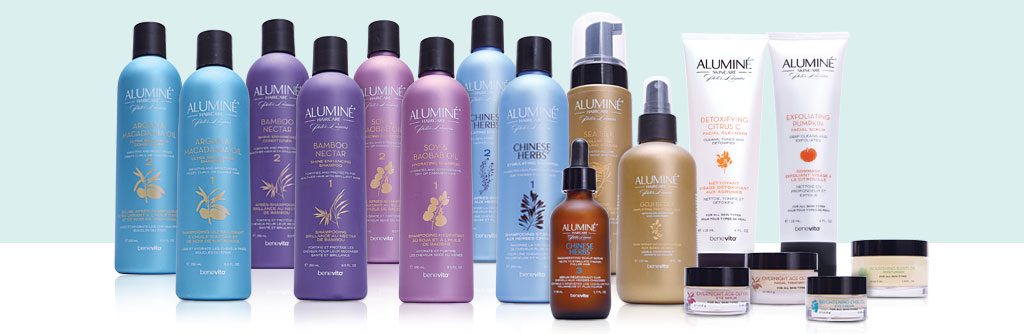
note: Learn more about Peter's own line of natural shampoos at
LamasBeauty.com
Discuss
this article with others right now at The
Salon!
|